Sunday, 4 June 2017

April 2017: The Power and the Glory by Graham Greene
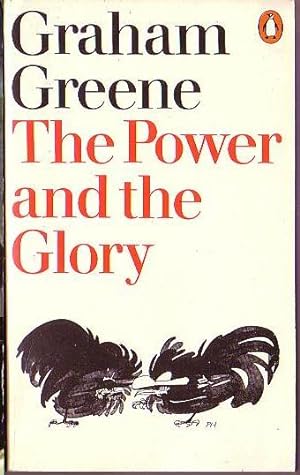
Also consider these LitLovers talking points to help get a discussion started for The Power and the Glory:
1. Why has this Mexican state outlawed the practice of Catholicism? What is its argument against the religion?
2. Why is Father Jose's presence tolerated by the state? What purpose does he serve for the government? What comparisons can you make between him and the Whiskey Priest?
3. Discuss the complicated character of the whiskey priest. What keeps him from leaving for another state, one more tolerant of Catholicism? Why does he continue to minister to the peasants despite the risk to his life? How does he view those he is so determined to serve?
4. In what way is the priest tormented by his faith...or lack thereof? What is the nature of his self-doubt?
5. What do you make of the fact that many have been executed as a result of their involvement with the priest, while the priest himself flees. Is the priest's sense of guilt justified...or not?
6. Talk about the priest's nemisis—the lieutenant? What are his motives for pursuing the priest? How would you describe him—as purely evil...or a more complicated character?
7. Follow-up to Questions #3 and #4: Graham Greene has given readers a priest who is hardly an exemplar among his peers. For what purposes would the author have created such a character—with his many failings—as the novel's hero. Why does the priest remain nameless throughout the novel?
8. Is the whiskey priest a martyr? Why does he himself not believe he is one? What does he mean when he says, "I don't think martyrs are like this"? What qualifies one as a true martyr?
9. What is the symbolic significance of the priest's misplaced Bible and other religious paraphernalia? What is symbolic about trading his clothes and donning those of a peasant?
10. Do you think Greene intended the priest to be a Christ figure? Do you see him as such? Why...or why not?
11. The culmination of the novel occurs in the jail cell. What revelation comes to the whiskey priest? What is the irony of an imprisoned body vs. the spirit?
12. How does the author portray Mexico? How does he use the setting of Mexico as an atmospheric/thematic backdrop for the novel?
13. What do you make of the fact that in 1953, 13 years after it was published, a Vatican curia condemned the novel and asked Greene to make revisions? Apparently the Vatican took issue with the corrupted character of the whiskey priest. (Greene made no revisions.)
14. Greene's novel explores the tension between belief and nonbelief. How does the story come to grips with that dichotomy? What is the central "message"? Is it one of hope...or despair?
15. Has reading this book altered, in any way, your faith, or your understanding of faith?

Wednesday, 15 February 2017
February 2017: His Bloody Project by Graeme Macrae Burnet
We were few on Monday, but we had a good chat about His Bloody Project – universally enjoyed, and lots of intriguing unresolved elements as a result of the 'unreliable' narrative construction, particularly around Jetta and exactly what Lachlan Broad’s relationship with Roddy’s mother had been.

Our next book is The Gustav Sonata by Rose Tremain.
Next meeting is at Gill’s in Brighton on Tuesday 14th March – hope to see lots of you there.
January 2017: Number 11 by Jonathan Coe
January's book was Number 11 by Jonathan Coe, and we met in Crawley to discuss it.

An intriguing story which provoked much animated talk, particularly of the ending and people's dissatisfaction, or otherwise, with the direction that the narrative went in.
The references to popular culture and our media-saturated world were appreciated, and the nature of the interconnected character stories; though inevitably there were preferences for different characters.
The moments of the 'menu heads' were much commented upon!
Thank you to Jane for hosting.

An intriguing story which provoked much animated talk, particularly of the ending and people's dissatisfaction, or otherwise, with the direction that the narrative went in.
The references to popular culture and our media-saturated world were appreciated, and the nature of the interconnected character stories; though inevitably there were preferences for different characters.
The moments of the 'menu heads' were much commented upon!
Thank you to Jane for hosting.
Tuesday, 6 December 2016
2016 Book Titles
Here is the 2016 list of books, which took us past 100 in total, and also saw the tenth anniversary of the group. Two original members remain (though we started small with only three of us).
98. Waiting for Sunrise by William Boyd
99. All the Light We Cannot See by Antony Doerr
100. Go Set a Watchman by Harper Lee
101. Year of Wonders by Geraldine Brooks
102. A Brief History of Seven Killings by Marlon James
103. The Goldfinch by Donna Tartt
104. The Big Sleep by Raymond Chandler
105. Restoration by Rose Tremain
106. The Reader on the 6.27 by Jean-Paul Didierlaurent
107. The Miniaturist by Jessie Burton
108. Longbourn by Jo Baker
Year of Wonders was my personal favourite this year, but actually, what a list. Only one dud, and I'm not mentioning any names.
98. Waiting for Sunrise by William Boyd
99. All the Light We Cannot See by Antony Doerr
100. Go Set a Watchman by Harper Lee
101. Year of Wonders by Geraldine Brooks
102. A Brief History of Seven Killings by Marlon James
103. The Goldfinch by Donna Tartt
104. The Big Sleep by Raymond Chandler
105. Restoration by Rose Tremain
106. The Reader on the 6.27 by Jean-Paul Didierlaurent
107. The Miniaturist by Jessie Burton
108. Longbourn by Jo Baker
Year of Wonders was my personal favourite this year, but actually, what a list. Only one dud, and I'm not mentioning any names.
December 2016 Longbourn by Jo Baker
This meeting was our tenth anniversary, and took place in Billingshurst with a celebratory Christmas meal.
Generally members enjoyed the connections with Pride and Prejudice, and felt that after a not very engaging start the plot picked up and added some interesting new dimensions to interpretations of Austen, particularly in relation to Mr and Mrs Bennett.
Generally members enjoyed the connections with Pride and Prejudice, and felt that after a not very engaging start the plot picked up and added some interesting new dimensions to interpretations of Austen, particularly in relation to Mr and Mrs Bennett.
Subscribe to:
Posts (Atom)